
The first conference of the BNP Paribas Chair Futures of Quantitative Finance will take place on Thursday, January 22, 2026 at the amphithéâtre Buffon of Université Paris Cité, 15 Rue Hélène Brion, 75013 Paris. The conference will gather international speakers, academics, quants, PhD and postdoc students, and will be concluded by an M2MO alumni meeting.
Program:
9am-9:20am Welcome coffee
9:25am Welcome address
9:30am-10:15am Bruno Dupire, Bloomberg L.P. (New York City, USA).
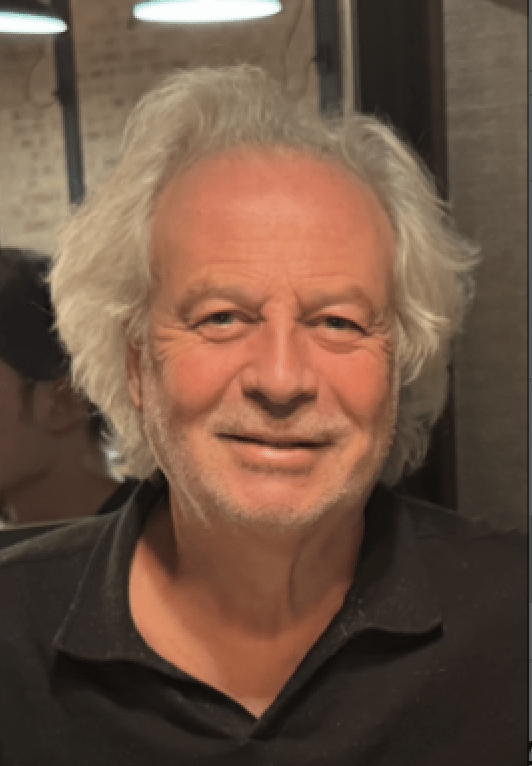
- Title: Some Financial Applications of the Functional Itô Calculus.
- Abstract: Path dependence is ubiquitous in finance, sometimes explicitly as the payoff of an exotic option may depend on the whole path of the asset price, not only at maturity, other times through the dynamics of the underlying (volatility, dividends…). The framework to model path dependence is the Functional Itô Calculus and we review its basic concepts before offering a partial panorama of its applications: computation of the Greeks of path dependent options, perturbation analysis, volatility risk decomposition, super-replication, American options, Taylor expansion with signatures for fast computation of VaR and characterization of attainable claims, amongst other ones.
10:15am-11:00am Christa Cuchiero, University of Vienna (Austria).

- Title: Modeling with neural and signature stochastic differential equations
- Abstract: Motivated by generative AI inspired modeling, we delve into the mathematical foundations of neural and signature SDEs, emphasizing especially their dynamical universal approximation capabilities. As financial applications we present a data-driven version of the Heath–Jarrow–Morton framework for interest rate modeling, and signature-based asset price models calibrated jointly to VIX and SPX options.
The talk is based on joint works with Claudio Fontana, Eva Flonner, Guido Gazzani, Alessandro Gnoatto, Kevin Kurt, Janka Möller and Sara Svaluto-Ferro
11:00am-11:30am Coffee break
11:30am-12:00pm FQF Chair young researchers Morning session (2x15min)
- Justin Ruelland, PhD Student at LPSM Université Paris Cité, CIFRE with BNP Paribas Global Markets Quantitative Research. Justin graduated in 2024 with the M2MO Master’s degree and the engineering degree from ENSAE Paris. Following this, he began a CIFRE PhD between BNP Paribas and LPSM (Université Paris Cité), co-supervised by Jean-François Chassagneux, Stéphane Crépey, and Grégoire Loeper, on optimal transport calibration methods.
- Title: Well-Posedness of Local-Volatility Calibration by Semi Martingale Optimal Transport.
- Abstract: We study the Hadamard well-posedness of the problem of Local-Volatility calibration by semimartingale optimal transport (SMOT), with partial marginal constraints. The calibration is performed under moment constraints on the marginal distributions, induced by a finite set of European option prices. We establish conditions for existence, uniqueness and quantitative stability of the calibrated solution. We additionally derive a rigorous linearization of the HJB, which enables the computation of the dual gradient. These results mainly rely on a regularity analysis of the HJB equation’s flow arising in the dual problem.
- Simon Sananes, PhD student at LPSM Université Paris Cité, CIFRE with BNP Paribas Global Markets Quantitative Research. After graduating from the M2MO in 2024, Simon started a CIFRE PhD thesis at LPSM and BNP Paribas under the supervision of Jean-François Chassagneux (ENSAE-CREST & IP Paris), Lokman Abbas-Turki (LPSM, Sorbonne University), and Jean-Philippe Lemor (BNPP), Yassine Youlal (BNPP) and Gregoire Loeper (BNPP). His work focuses on developing numerical probabilistic methods to price high-dimensional options in the Uncertain Volatility Model.
- Title: Stochastic policy gradient methods in the Uncertain Volatility Model.
- Abstract: In the classical Black–Scholes framework, the volatility of the underlying is specified once and for all. In contrast, the Uncertain Volatility Model (UVM) postulates that the instantaneous covariance structure of a multi-asset underlying lies in a prescribed bounded set. The seller’s robust (superhedging) price is defined as the supremum, over all admissible volatility and correlation processes, of the corresponding risk-neutral expected discounted payoff. This yields conservative valuations and interval-valued no-arbitrage price ranges in markets where volatility and correlation are not directly traded and are only imperfectly observed. Mathematically, the problem becomes a high-dimensional stochastic control problem and is severely affected by the curse of dimensionality. We develop Monte Carlo methods based on an actor–critic policy-gradient scheme, where randomized controls are parameterized by shallow neural networks and trained using Proximal Policy Optimization. Our numerical experiments include various payoffs, from low to high dimensions, and illustrate the efficiency and accuracy of our algorithms.
12:00pm-12:45pm Mathieu Rosenbaum, Paris Dauphine-PSL University.
- Title: A unified theory of volume, volatility and market impact
- Abstract: We introduce a joint microfoundation for volatility and order flow that is consistent with salient empirical facts. In particular, it identifies the so-called core order flow as the latent driver underlying the main statistical regularities of financial markets. We start from a two-layer Hawkes framework that separates core activity, representing non-reactive trading rooted in long-term information, from reaction activity, capturing endogenous responses to observed trades. In the natural continuous time limit of this model, volatility (and the unsigned order flow) is rough but the signed order flow is a mixture of a smooth process with long-range dependence and a martingale. In addition, under no-arbitrage constraints, the model endogenously connects the exponents governing order flow, volume, market impact and volatility. This is joint work with Johannes Muhle-Karbe, Youssef Ouazzani-Chahdi and Grégoire Szymanski.
12:45pm-2:15pm Lunch buffet (Buffon lobby)
2:15pm-3pm Nizar Touzi, New York University Tandon School of Engineering (USA).

-
Title: Bridging Shrödinger and Bass for generative diffusion modeling: Theory.
-
Abstract: Generative models aim to approximate an unknown probability distribution in high dimension using a finite sample of independent draws from it. Motivated by variance-preserving score-based diffusion models, we introduce a new diffusion-based transport plan on the path space that is optimal with respect to a criterion combining entropy minimization and stabilization of the quadratic variation. The resulting transport plan can be interpreted as an interpolation between the Schrödinger bridge and the Bass solution from martingale optimal transport. Performance of the method on concrete examples and comparison with the state of the art will be covered in the doctoral students session by Alexandre Alouadi.
3pm-3:45pm FQF Chair young researchers Afternoon session (15min+30min)
- Alexandre Alouadi, PhD student at Ecole Polytechnique, CIFRE with BNP Paribas Data & AI Lab Global Market.
- Title: Bridging Schrödinger and Bass for Generative Modeling: The LightSBB-M Algorithm.
- Abstract:The Schrödinger Bridge and Bass (SBB) formulation, which jointly controls drift and volatility, is an extension of the classical Schrodinger Bridge (SB) and has been covered from a theoretical point of view by Nizar Touzi. In this talk, we present LightSBB-M, an algorithm that computes the optimal SBB transport plan in only a few iterations. We show that LightSBB-M achieves the lowest 2-Wasserstein distance on synthetic datasets against state-of-the-art Schrödinger Bridge and diffusion baselines with up to 35% improvement. We also illustrate the generative capability of the framework on an unpaired image-to-image translation task (adult ↔ child faces in FFHQ). These findings demonstrate that LightSBB-M provides a scalable, high-fidelity SBB solver that outperforms existing Schrodinger Bridge and diffusion baselines across both synthetic and real-world generative tasks. Moreover, we show that our algorithm can be extended for time series data with numerical experiments.
- Léo Parent, Postdoctoral student at ENPC. Léo’s research focuses on volatility modeling, with a particular emphasis on path-dependent volatility models.
- Title: The Guyon-Lekeufack Volatility Model in Discrete Time: Calibration under P and Q
- Abstract:This talk presents different calibration approaches under both the risk-neutral measure (Q) and the historical measure (P) for a discrete-time version of the path-dependent volatility model introduced by Guyon and Lekeufack. We first illustrate the model’s ability to fit option data across multiple dimensions, including the VIX time series, the SPX volatility surface, and joint SPX/VIX smiles. We then turn to estimation of the model under the historical measure via maximum likelihood and show that the considered model outperforms existing approaches in the literature according to likelihood-based metrics. In addition, we highlight the overall congruence between the measure induced by the P-estimated model and the average behavior of option market data. The results indicate that the model captures well the joint formation of the P and Q measures and that this relationship appears to be relatively stable over time. Building on these observations, we introduce new estimation approaches that combine P and Q time-series data to enhance calibration robustness. In particular, since time-series calibration of SPX/VIX volatility surfaces using Monte Carlo–based approaches becomes impractical when the number of dates is large, a deep calibration approach is introduced. Within this framework, the different estimation approaches are assessed through a trading game, using the considered model as a volatility arbitrage tool.
3:45pm-4:15pm M2MO alumni session: Chiara Amorino, Universitat Pompeu Fabra (Barcelona).
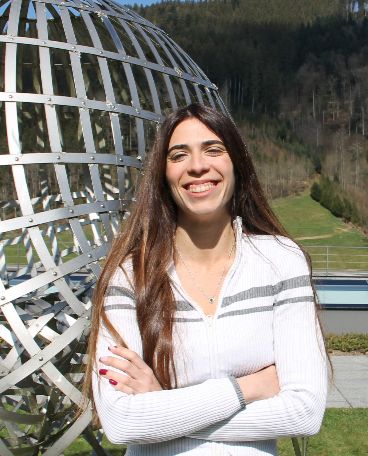
- Title: Minimax rate for multivariate data under componentwise local differential privacy constraints.
- Abstract: Our research analyses the trade-off between maintaining privacy and preserving statistical accuracy when dealing with multivariate data subject to componentwise local differential privacy (CLDP). Under CLDP, each component of the private data is released through a separate privacy channel. This allows for varying levels of privacy protection for different components or for the privatization of each component by different entities, each with their own distinct privacy policies. We develop general techniques for establishing minimax bounds that quantify the statistical cost of privacy as a function of the privacy levels \alpha_ of the components. The versatility and efficiency of these techniques are demonstrated through various statistical applications.
4:15pm-4:45pm Tea break
4:45pm-5:30pm Jean-Philippe Bouchaud, CFM, member of the French Academy of Sciences (Paris).

- Title: Elastic String (Sheet) Models of Forward Interest Rates & Implied Vol Surfaces.
- Abstract: We revisit the specific“stiff” elastic string field theory of Baaquie and Bouchaud (2004) in a way that makes its micro-foundation more transparent. Our model can be interpreted as capturing the effect of market forces that set the rates of nearby tenors in a self-referential fashion. The model is parsimonious and accurately reproduces the whole correlation structure of the FRC over the time period 1994 − 2023, with an error below 2%. We need only two parameters, the values of which being very stable except perhaps during the Quantitative Easing period 2009 − 2014. The dependence of correlation on time resolution (also called the Epps effect) is also faithfully reproduced within the model and leads to a cross-tenor information propagation time of ≈ 10 minutes. We confirm that the perceived time in interest rate markets is a strongly sub-linear function of real time, as surmised by Baaquie and Bouchaud (2004). In fact, our results are fully compatible with hyperbolic discounting, in line with the recent behavioural Finance literature (Farmer and Geanakoplos, 2009). Finally, we extend these ideas to implied volatility surfaces.
5:30pm-7:30pm M2MO alumni cocktail reception (Buffon lobby)